همین حالا تماس بگیرید!
پاسخ فوری و مشاوره رایگان در انتظار شماست.
The dry goods, detergent, grocery and rice wholesale market in Tehran is always one of the most complicated supply chains of consumer goods, and the activists of this trade face many challenges such as price fluctuations, low quality of storage and market frauds. Accurate knowledge of quality standards and principles of product supply in this turbulent market makes the difference between a profitable business and commercial failure.
Investigating the market structure and basic supply criteria in the grocery and dry goods sector
Sustainable success in the wholesale market of food items and detergents in Tehran depends on the accurate segregation of warehouses, moisture control of rice and dried fruit warehouses, and direct purchase from the main farmer or producer. Failure to comply with these basic principles leads to quality loss and waste of capital.
Supply chain management in large metropolitan markets like Tehran requires the adoption of modern strategies. In the field of rice, knowing the different varieties (Taram, Hashemi, Shiroudi), checking the moisture level and cooking test is the first step before concluding a major purchase contract. On the other hand, due to their high sensitivity to smell, heat, and chemical leakage, detergent products require a storage infrastructure that is completely separate from bulk food items such as rice, beans, and dried fruits.
Autopsy of the issue and key variables in the dry goods and detergent market of Tehran
The first basic component: quality control and standardization of food storage
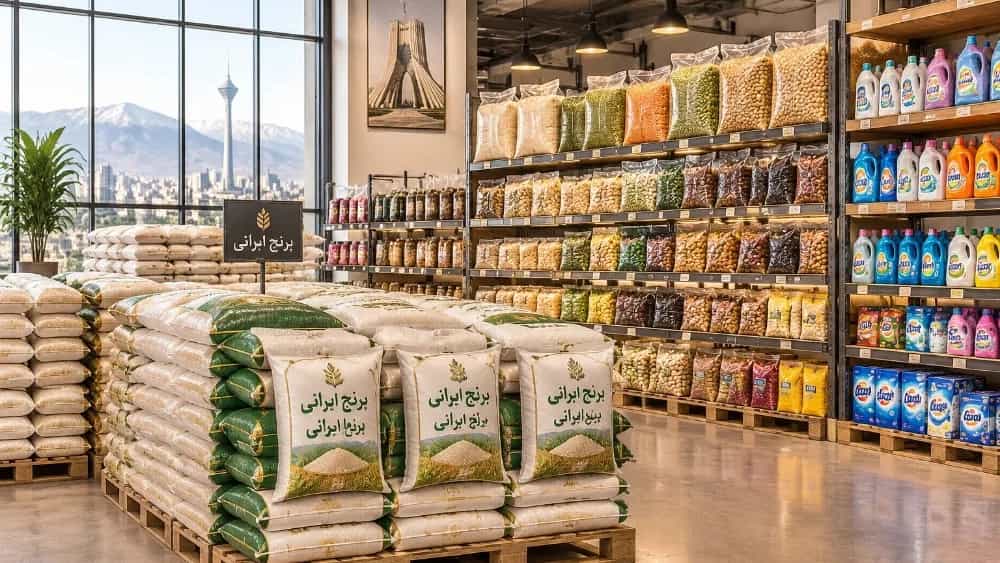
Grain and dry fruit warehouse should have proper ventilation, controlled temperature and standard pallets with a distance from the wall to prevent pest infestation and moisture absorption.
In the storage of rice and food, the relative humidity of the environment and the humidity of the product itself are determining factors. According to international food safety guidelines, continuous temperature control and periodic inspection of shipments are required to deal with storage insects. Failure to comply with these conditions will cause the growth of mushrooms and decrease the commercial value of the goods.
The second essential component: physical separation and safety of detergent products from food
Detergents and household chemicals should not be placed in direct proximity or shared shelves with uncoated food and dry fruits in order to avoid the risk of chemical contamination and odor transfer.
One of the common mistakes in traditional warehouses is arranging sanitary items and groceries next to each other. Even the plastic packaging of detergents may release steam or volatile substances due to the heat of storage, which negatively affects the taste and aroma of rice and dried fruit. Compliance with segregation standards based on the principles of warehousing management (GHP) is a critical requirement.
Evaluation index | Rice and dried fruits | Detergents and sanitary products |
Sensitivity to humidity | Very high (requires dry and cool storage) | Moderate (needs to stay away from waterlogging of cartons) |
Closeness to materials Chemical | Prohibited (risk of smell and pollution) | Original product |
Type of warehouse palletizing | Standard wooden pallet with spacing 20 cm from the floor | Sturdy pallets, stack height based on weight |
Threats | Weevils, willows, high humidity | liquid leakage, chemical reaction at high temperature |
My field experience: unspoken tricks and costly mistakes in the Tehran market
I have seen in the years of activity in the Tehran market and checking the performance of various trade units that the biggest mistake of major buyers is blindly trusting the appearance of the cargo without deep sampling. In my experience, in the bulk purchase of rice, sampling should be done from the bottom and central layers of the bags; Because sometimes old or wet rice is mixed with new rice.
A tip I often recommend to newbies is to not buy detergents based solely on low bulk pricing, as near expiration dates or bottles breaking in transit will completely kill the profit margin. Our main challenge in Iman Trading has always been to create a balance between the finished price and the first-hand quality, which is achieved by eliminating unnecessary middlemen in Tehran's Molavi and Shush markets.
Operational framework and implementation roadmap in product supply
For successful buying and selling in this industry, it is necessary to follow a step-by-step roadmap:
- Authenticity inquiry and sample testing: Before placing a bulk order of rice or dried fruits, be sure to cook and evaluate the physical sample.
- Review of logistics contracts: Ensuring that the cargo is transported with covered and clean vehicles that have not previously transported fragrant chemicals.
- Inventory inventory management (FIFO): Applying a system of goods departure based on the priority of the arrival date to prevent quality loss. dried fruit.
summary
The dry food, detergent, grocery and rice market in Tehran is a highly competitive but profitable space; Provided that the principles of warehousing, strict quality control and supply without intermediaries are on your agenda. If you need expert advice on the bulk supply of these items in Tehran or you want to complete your store's product basket with the highest quality, you can share your views and questions with me in the comments section so that I can respond to you personally.
