
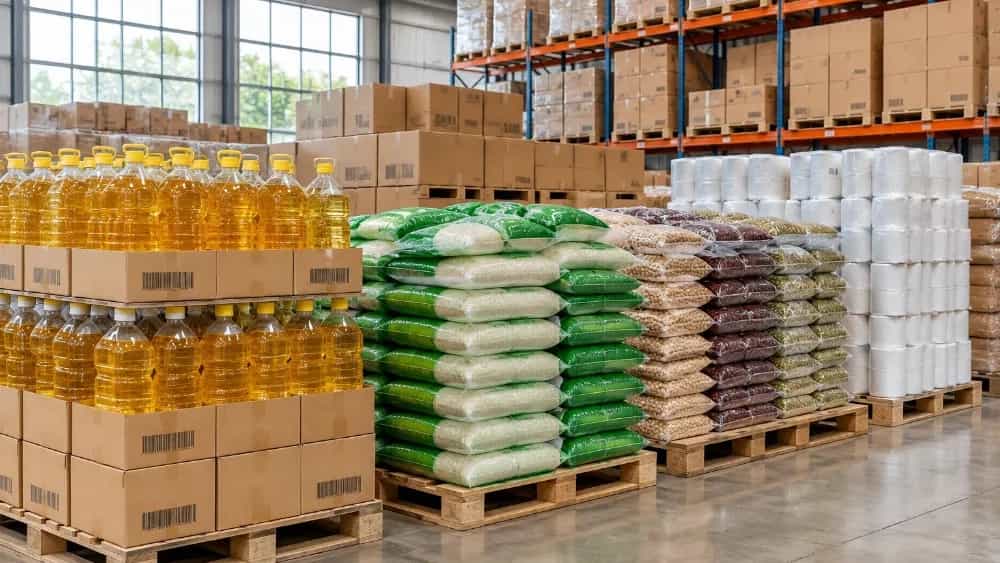
Bulk purchase of food for supermarkets and stores is the process of direct supply of goods from reliable banking and main distribution companies with the aim of reducing the cost price, eliminating multiple middlemen and achieving the highest retail profit margin. In this way, the supermarket owner optimizes the cash flow of the store by choosing the fast-moving items including oil, rice, sugar, sugar, paste, canned food and legumes and reduces the risk of product shortage on the shelves to zero. Iman Trading Group has organized an unmediated supply chain with daily production dates, guaranteed packaging health and fast shipping so that store managers can directly convert their working capital into gross profit.
Capital circulation strategy in the supply of fast-moving supermarket items
Our operational experience in the distribution market shows that the biggest mistake of supermarkets is freezing capital on low-circulation goods or buying from middlemen. Items such as liquid and frying oils, high consumption rice, sugar and broken sugar and washing liquids are the daily sales pulse of the stores. If the supply of these goods is not carried out with a price without intermediaries and a high expiration date, the profit margin of retail sales will be destroyed under the influence of overhead costs.
In the bulk purchasing process, the share of the best-selling goods from the order budget should be determined. When sourcing directly from Iman Trading, cargo is shipped in bulk to the store's desired tonnage without incurring unusual fees. This chain model enables the store owner to apply more Rial discounts on the shelves and expand his local customer base.
Management of expiration date and physical health of cartons
One of the critical bottlenecks in cargo delivery is receiving goods with a near expiration date or damage caused by improper transportation. According to our field data from the distribution network, product returns in supermarkets are often caused by leaking oil cartons and cracks in bean packages. Reliable supply should have a mechanism to deliver sealed corporate cartons to the store with mechanized palletizing and guaranteeing a long-term use-by date to avoid any in-store waste.
Adjusting the order circulation period and preventing excess storage
Storing bulk goods in the limited space of supermarkets increases the risk of physical damage, depreciation of goods and blocked liquidity. The economic solution is to adjust the bulk purchase cycle based on the weekly or biweekly sales period. Iman Trading provides the possibility of continuous supply with accurate loading schedule and regular shipping, so that there is no need to invest heavily in renting side warehouses.
Checklist of basic and best-selling items in bulk shopping
The major shopping basket of supermarkets should be designed in such a way that it covers all the main consumption categories of the household. In practice, it has been observed that the completeness of the shopping cart increases the incoming traffic of customers significantly. The key categories that should always be prioritized for major orders are as follows:
Cereals, rice and beans packaging
Providing well-cooked Iranian and Indian rice, lentils, beans, cobs and chickpeas with uniform sorting and moisture-proof packaging is one of the main foundations of the store. The absence of fluctuations in the quality of cooking and the appearance of the seeds stabilizes the long-term trust of neighborhood customers in the supermarket.
Edible oils, tomato paste and preserves
This category of goods are placed in the shopping cart based on well-known brands. In the bulk purchase of these items, the percentage of interest on the official invoice and the expiration date of more than one year are the key criteria for choosing the main banker.
Detergents, sanitary and high-use cellulose
Cellulosic products such as multi-use paper towels and gallon and bottled dishwashing liquids fill a large volume of shelves, but they have a high turnover rate. Supplying these products along with food items from a single source reduces combined transportation costs.
Requirements to reduce logistics costs and send directly to the store
Transportation cost and how to unload cargo is one of the factors that is ignored in the calculations of many store managers, while it has a direct impact on the cost of each item. The centralized purchase of all food and health items from a single center, such as Iman Trading, minimizes shipping costs compared to scattered purchases from several separate suppliers. Aggregating orders in the form of a loading order, both adjusts the unloading time during the store's quiet hours, and makes the issuing of invoices transparent for finance and accounting.